Cartoon Skull Warrior Character
First Impressions: Bold, Playful, and Unmistakably Memorable
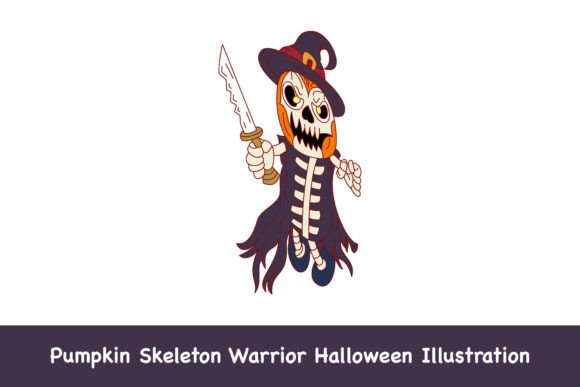
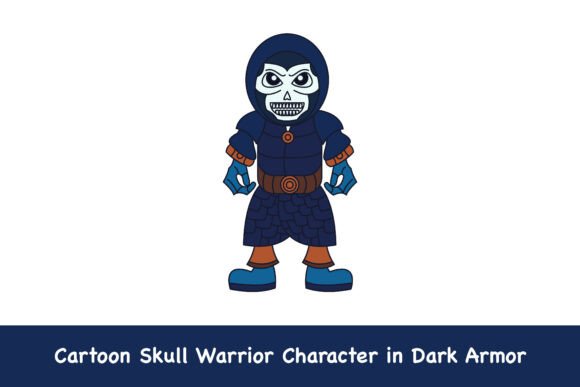
When I opened the Cartoon Skull Warrior Character file, my immediate thought wasn’t “cool graphic”—it was “this will pop on a sweatshirt.” The illustration balances cheeky attitude with clean cartoon structure: a stylized skull in dark blue armor, hood pulled low, orange accents on gloves and boots, and just enough eerie expression to land without tipping into Halloween-only territory. It’s not photorealistic, nor is it minimalist—it lives in that sweet spot where character-driven design meets embroidery-friendly shape. As an illustrator and embroidery reviewer who’s tested hundreds of digital assets for real production, I appreciate how the silhouette reads clearly at medium scale—no tiny facial features lost in fill stitch, no overlapping armor plates that’ll turn muddy under dense satin stitching.
A Real-World Test: Embroidering It on a Heavyweight Cotton Tote Bag
Last week, I stitched the Cartoon Skull Warrior Character onto a 14-oz natural canvas tote for a local boutique’s summer launch. Why this project? Because totes demand clarity at arm’s length, tolerate moderate stitch density, and reward bold personality. The design held up beautifully: the dark blue armor read as rich and cohesive (not patchy), the orange details popped against both light and mid-tone fabric, and the hood’s curve translated smoothly into satin-stitched edges—no puckering or thread breaks. Customers responded instantly—not just “oh, cute,” but “I need that on my gym bag.” That’s the sign of a strong machine embroidery design: it doesn’t just sit on fabric; it invites interaction.
Where It Shines—and Where It Needs Thought
The Cartoon Skull Warrior Character excels in custom apparel, embroidered patches, and small-batch merchandise like aprons, pillow covers, and tea towels. Its confident proportions mean it scales well from 3.5" to 5.5" without losing legibility—ideal for sweatshirt embroidery or baby onesies (though I’d skip the full armor version for newborns; consider simplifying or choosing a softer variant). It’s also a standout for holiday embroidery when styled with subtle seasonal tweaks—think a tiny candy cane tucked in the belt or snowflakes floating near the hood (just remember: any additions must be vetted for stitch density).
That said, use caution on curved surfaces like caps—the hood’s deep fold and boot contours may distort if hooped too tightly or digitized without stretch compensation. On thin or stretchy fabrics (like lightweight knits), add medium-weight cutaway stabilizer and reduce top tension slightly to prevent gapping around the armor seams. And avoid cramming it into hoops smaller than 4"x4": those orange glove details and eye sockets rely on defined stitch paths, not implied lines.
Design Integrity Meets Commercial Reality
As an Etsy seller and craft business mentor, I watch how design choices ripple across customer trust and perceived value. The Cartoon Skull Warrior Character strengthens handmade presentation because it feels intentional—not generic clip art dressed up as embroidery. Buyers recognize quality when they see clean edge definition in the satin-stitched armor plating and balanced fill stitch in the skull’s cranium. That translates directly to higher perceived value on price tags, smoother giftability (great for teen birthdays, comic-con merch, or “nerdy dad” Father’s Day bundles), and stronger brand consistency for shops leaning into playful gothic or retro-fantasy aesthetics.
It also performs well in printable mockups—its contrast and shape render crisply in black-and-white previews, which matters for digital product sellers who rely on clean, fast-loading thumbnails. Just don’t assume it’s license-free for resale unless confirmed: verify whether this digital embroidery file permits commercial use of finished products *and* redistribution of the file itself. Many Illustrations sold as Graphics allow end-use only.
Practical Designer Notes Before You Stitch
- Always test first: Run the Cartoon Skull Warrior Character on scrap fabric matching your final substrate—especially if using textured weaves or dark backgrounds.
- Check thread color contrast: Orange against dark blue works, but swap to gold or rust on navy garments to avoid visual vibration.
- Review stitch density: Dense fill areas (like the skull’s forehead) may benefit from underlay or reduced density if embroidering on fleece or terry cloth.
- Confirm hoop size compatibility: Measure the widest point—including boot tips and hood height—before loading into your machine.
- Inspect small details: Zoom in on the eye sockets and glove fingers—running stitch outlines here should be crisp, not jagged.
- Mock it both ways: Preview in black-and-white and grayscale to catch unintended tonal flattening.
- Stabilize smartly: Use tear-away for stable wovens, cutaway for knits or high-wear items like tote bags.
- Verify usage rights: If selling finished embroidered items or reselling the file as part of a craft bundle, confirm licensing terms explicitly—don’t rely on category labels like Graphics alone.
Final Thought: A Design That Earns Its Place
The Cartoon Skull Warrior Character isn’t just another skull graphic—it’s a considered embroidery project waiting for the right context. It bridges edgy and approachable, detailed and durable, playful and professional. Whether you’re prepping a limited-run batch of embroidered patches for a craft fair, designing personalized gifts for a niche audience, or building a cohesive line of small shop products, this design adds character without compromising stitch integrity. Just remember: great embroidery starts with thoughtful selection—not just what looks good on screen, but what holds up, resonates, and sells as a polished finished product. This one does.