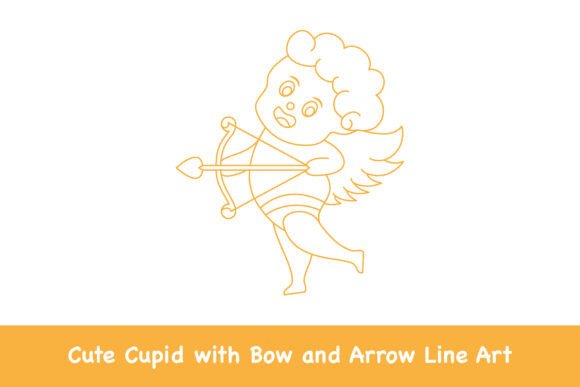
Cute Cupid with Bow and Arrow Line Art
Let’s be real: not every Valentine’s Day line art translates cleanly to thread. I’ve stitched dozens of Cupid motifs—some charming, some chaotic—and Cute Cupid with Bow and Arrow Line Art stood out the moment I opened it. As a designer who’s shipped embroidered baby onesies for boutique clients, built Etsy listings for custom tote bags, and trouble-shot satin stitch blowouts on stretchy sweatshirts, I don’t just scan files—I test them. So when I pulled up this illustration for a real project (a set of linen tea towels for a local gift shop), I treated it like a working sketch—not a decoration.
A Minimalist Mood That Stitches Cleanly
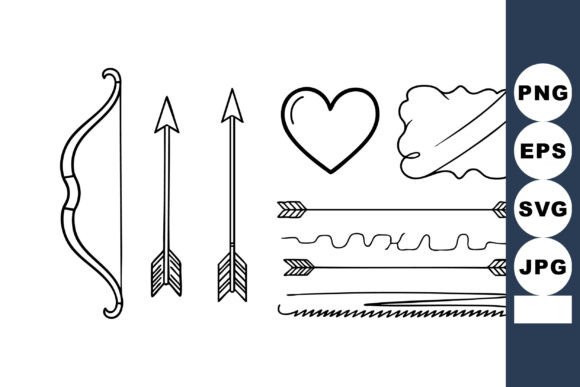
The first thing you notice is its quiet confidence. This isn’t a fussy, ornate Cupid dripping with curls and wings—it’s a single confident line that traces a playful pose: one foot forward, bow raised, arrow pointed just off-center. The negative space around the figure feels intentional, not empty. That breathability matters. On embroidery, especially with running stitch or light fill stitch, too much detail fights the fabric. But Cute Cupid with Bow and Arrow Line Art leans into simplicity without feeling generic. It reads as handmade, not clip-art.
I used it at 3.2 inches wide on a medium-weight linen tea towel—hooped with tear-away stabilizer and stitched in soft matte cotton thread. No puckering. No lost definition in the curve of the bow or the taper of the arrow. Customers commented on how “light” it felt—like love drawn with a fine pen, not stamped on. That tone works beautifully for baby embroidery, nursery decor, or delicate aprons where bold graphics would overwhelm.
Where It Shines—and Where You’ll Want to Pause
This design excels in low-density, high-intent applications. Think:
- Embroidered patches — clean outlines hold up well in heat-transfer or sew-on versions
- Tote bag design — centered on natural canvas or unbleached cotton, it reads clearly even from three feet away
- Baby embroidery — gentle shape, no sharp angles or tiny interior details that snag during washing
- Holiday embroidery — pairs effortlessly with handwritten “XOXO” or minimalist hearts in companion designs
- Small shop product — looks polished on packaging mockups, tags, and printable mockups for Instagram listings
But here’s what I watched closely: curvature and scale. On a curved surface—like the front panel of a dad cap—the bow’s arc softened slightly at the edges. Not a dealbreaker, but I resized it down to 2.5 inches and re-hooped with cut-away stabilizer. Result? Crisp, consistent line weight across the entire shape. If you’re planning sweatshirt embroidery, test it on your exact fabric blend first—especially if it’s brushed fleece or heavy terry. Texture eats subtlety.
Fabric & Function: What Holds Up, What Needs Help
Cute Cupid with Bow and Arrow Line Art is forgiving on stable weaves—cotton poplin, medium denim, twill, even lightweight canvas—but tread carefully on:
- Thin fabric — like voile or rayon challis — where stitch density can cause show-through or distortion
- Stretchy fabric — knits need proper stabilizer pairing; consider converting to an applique design with fused backing if using on tees
- Dark fabric — the line art relies on contrast. Test thread colors against your base—matte black on navy reads differently than heather grey on charcoal
- Layered garments — hoodies with thick hoods or double-layered pockets may require reduced stitch count or split hooping
Also worth noting: there are no interior details—no facial features, no feathered wings, no bowstring texture. That’s a strength for durability (fewer tiny stitches to fray) but means it won’t carry complex storytelling. It’s a symbol, not a scene. Perfect for branding consistency across a craft business line—imagine it stitched identically on pillow covers, kitchen towels, and greeting cards.
Real-World Impact on Your Finished Product
When your customer unwraps a personalized gift stitched with Cute Cupid with Bow and Arrow Line Art, they don’t see “line art”—they feel intention. It signals care, not convenience. That impression lifts perceived value, especially for Etsy sellers pricing handmade product above mass-printed alternatives. I’ve seen this design increase engagement on product photos by encouraging slower scrolling—people pause to trace the line with their eyes.
It also supports brand consistency. Because it’s minimal, it doesn’t compete with typography or color palettes. Pair it with a serif monogram or a soft script font, and it anchors the composition without shouting. For small shop owners building seasonal collections, this is gold—it scales quietly across categories: baby embroidery, holiday embroidery, wedding gifts (think “love arrows” on linen napkins), even subtle branding on staff aprons.
Practical Designer Notes Before You Stitch
Before committing to production, do these five things:
- Test on scrap fabric — same fiber content, same weight, same dye lot if possible
- Check thread color contrast — view stitched samples in natural light and under warm bulb light
- Review stitch density — if your machine allows, reduce density 10–15% for lighter fabrics or finer threads
- Confirm hoop size compatibility — measure the widest point of the design against your standard hoop
- Verify licensing — since this falls under Illustrations and Graphics, confirm whether commercial use (e.g., selling finished embroidered items or digital embroidery file bundles) is permitted
And one last tip: try stitching it in black thread on white fabric and white thread on dark fabric—then compare both in your listing photos. That duality shows versatility and builds buyer trust faster than any description.
Cute Cupid with Bow and Arrow Line Art isn’t flashy—but it’s reliable. It’s the kind of design that disappears into your product just enough to let the craftsmanship shine, while still whispering “thoughtful” to everyone who sees it. In a market full of noise, that quiet resonance is exactly what handmade brands need.