Natural Silhouette Panel Bundle: Graphics & Illustrations
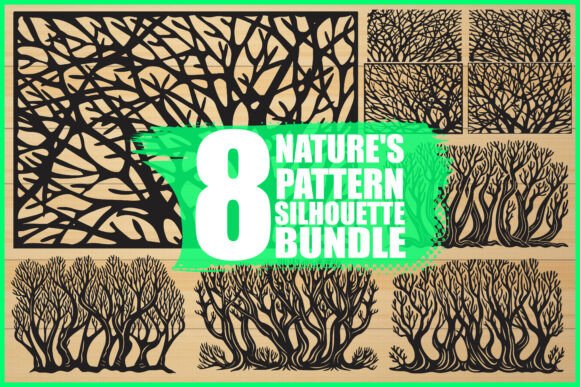
When I first opened the Natural Silhouette Panel Bundle, I was immediately drawn into a world of quiet, organic storytelling. The eight intricate tree branch and organic cutout patterns feel less like standard clipart and more like a curated collection of artisan stencils. Each design carries a handcrafted, almost botanical reverence—perfect for a local business that wants to communicate a deep connection to nature, craftsmanship, and understated elegance. For a recent branding project I was leading for a small apothecary, this bundle became the quiet hero of the entire visual identity.
The Mood That Speaks Without Shouting
The cutout silhouettes create a mood that is simultaneously grounded and elevated. There is a delicate tension between the intricate branch tangles and the generous negative space, and that's exactly what makes the asset so versatile. It whispers organic luxury, never shouting. For a handmade soap brand, a boutique florist, or a seasonal candle line, this mood translates directly into customer trust. When a product label or hang tag carries this level of intentional detail, the buyer instinctively feels the maker’s care. The mood is not feminine or masculine—it is botanical, neutral, and deeply calming, leaning into an earthy modern design that suits a wide range of small businesses.
Pinpointing the Brand Personality
This bundle does not work for every brand, and that's a strength. The Natural Silhouette Panel Bundle suggests a personality that is artisanal, thoughtful, and quietly confident. It suits a local honey producer, a zero-waste refill shop, a children’s nature-inspired clothing line, or a home decor studio specializing in laser-cut wood panels. The pattern language avoids folk-art clichés and instead feels contemporary and slightly editorial. For my client, a small batch skincare brand called WildBloom Botanicals, the patterns became the backbone of their packaging line—conveying botanical purity without a single leaf or flower illustration cliché. The personality is rooted in craftsmanship, making it a natural fit for any handmade business that values authenticity.
From Screen to Shelf: Real Packaging Applications
When I imported the SVG files into our design workspace, the first thing I did was test them on product mockups. The bundle’s 8 patterns adapt beautifully to a wide range of packaging design uses. For WildBloom’s botanical soap labels, I placed a simplified branch silhouette as a subtle backing texture behind the product name, giving the label a soft, die-cut feeling without the production cost. The same pattern, scaled up and used as a background on a thank-you card, created a cohesive unboxing experience. For a seasonal candle release, we used one of the more open cutout designs as a stencil-like motif on the glass vessel, printed with a frosted effect. This is the kind of graphic design asset that transitions effortlessly from digital product mockups to physical product labels.
Beyond packaging, I see the bundle working brilliantly for boutique swing tags, menu graphics for a forest-to-table café, hygge-inspired social media graphics, and even as a decorative screen for a website’s hero section. The organic nature of the outlines means they never feel like a generic template, which is crucial for small business branding that must stand out on a crowded shelf.
Where the Silhouette Panels Shine Brightest
After testing across dozens of real-world brand touchpoints, these are the places where the Natural Silhouette Panel Bundle delivers the strongest first impression:
- Product labels – especially on kraft paper, frosted glass, or matte boxes where the contrast of the silhouette enhances the handmade feel.
- Packaging accents – used as a panel divider, a belly band, or a subtle texture behind a logo, the patterns add instant packaging design depth.
- Thank-you cards and inserts – the cutout designs turn a simple note into a memorable brand moment.
- Social media graphics – a single pattern placed behind a quote or product photo creates a recognizable visual thread for Instagram or Pinterest.
- Promotional banners – the larger, more open-cut designs work beautifully as hero graphics for seasonal campaigns or local market posters.
- Printable design elements – for small businesses that sell digital products or printables, these vectors are a dream for creating wall art, stencils, or decorative screens.
- Product mockups – when presenting a brand concept to a client, the patterns help sell the atmosphere instantly.
Where Constraint Creates Better Design
As a brand designer, I know that even the most beautiful illustration must be used with discipline. The Natural Silhouette Panel Bundle is intricate, and that intricacy demands breathing room. Here’s where I proceed with caution—and where I advise other creatives and business owners to test carefully:
- Very small labels – the delicate branch lines can become muddy or overwhelming on a one-inch cosmetic jar. Always test at print size.
- Crowded product packaging – when ingredient lists, legal text, and multiple logos compete, the silhouette can tip the visual hierarchy into chaos.
- Low-contrast backgrounds – the pattern’s magic depends on silhouette clarity. On a soft beige or muted tone, the design may lose its graphic punch.
- Luxury minimalist brands – if the brand identity relies on extreme restraint and wide white space, applying a full pattern might feel heavy-handed. A single branch snippet used sparingly is often better.
- Formal corporate branding – this asset is not at home in a law firm or a medical device label. Reserve it for businesses that can carry a natural, approachable personality.
The key is to ask: does the decoration support the message, or does it compete with the most important text? When in doubt, I always place the pattern in a background layer and reduce opacity by 10–20% to let the product name and hero copy breathe.
Practical Brand Designer Notes for Real-World Use
Before rolling out the Natural Silhouette Panel Bundle across a client’s commercial design, I run a thorough checklist that every business owner and marketer should adopt:
- Test on real packaging mockups – never trust a screen preview. Print the pattern on the actual paper stock and wrap it around a bottle or box.
- Check black and white usage – if the design will ever be printed on a monochrome receipt, stamp, or laser engraving, the silhouette must remain legible without color.
- Preview it on small labels – resize the vector to the exact dimensions of a lip balm label or a price tag. Some patterns hold up beautifully; others may need simplification.
- Test with brand colors – apply the silhouette in deep forest green, terracotta, or a muted gold. The vector editability of the SVG files allows instant color changes without losing sharpness.
- Compare with competitor packaging – make sure your use of the pattern doesn’t look like a template someone else might have grabbed from the same creative marketplace.
- Verify print quality – especially for stencil-like designs, thin lines must meet the minimum thickness for your printer. A quick test print can save hundreds of misprinted labels.
- Inspect SVG and PNG transparency – the bundle includes both formats. The PNG design assets are great for Canva templates and quick social media graphics, while the SVG design files unlock full editing for professional branding.
- Test font pairings early – I always place the pattern beside a serif font, a sans serif font, a script font, a handwritten font, and a display font. The Natural Silhouette Panel Bundle pairs exceptionally well with a clean sans serif (like Nimbus or Inter) and a refined serif (like Cormorant). With a script font, the combination can become too ornate unless the pattern is used very sparingly.
- Confirm commercial licensing – before using the design for client work, physical product sales, or full-scale branding, always check that the commercial license covers your intended use. This bundle is a design asset from a creative marketplace, and understanding the license terms protects your business and your client’s brand identity.
Font Pairings That Respect the Silhouette
I’ve experimented with dozens of typefaces alongside these patterns, and the results are clear: the organic cutout designs demand typography that respects their rhythm. For a modern design direction, a minimal sans serif creates a pleasant tension between geometric clarity and natural flow. For a more editorial or boutique feel, a delicate serif supports the artisanal character. I’ve also used a handwritten font for a single wordmark on a soap label, and the pattern framed it beautifully—but I kept the rest of the label clean. The visual hierarchy remains intact when the silhouette acts as a decorative frame, not a competitor.
Licensing and Commercial Peace of Mind
One of the most overlooked steps in small business branding is verifying the commercial license. The Natural Silhouette Panel Bundle is a digital product that can be used across packaging, marketing visuals, and web design, but only if the license permits it. For my WildBloom project, I made sure the license covered physical product use, unlimited print runs, and inclusion in logos or brand marks. Many creative marketplace assets come with standard licenses that restrict the number of sales or require an extended license for merchandise. Reading the fine print before you finalize a product label is not optional—it’s a critical part of professional branding.
A Quiet Backbone for the Whole Brand Story
After living with this bundle for a month, I’ve come to see it as far more than a simple illustration set. It’s a graphic design asset that can anchor a brand identity, unify a seasonal campaign, and give a local business an instantly recognizable shelf presence. For the handmade soap maker, the boutique florist, or the home decor shop, the Natural Silhouette Panel Bundle delivers a visual language that feels intentional, meditative, and deeply connected to the natural world. It’s not for every project, but when it fits, it transforms a product from commodity to keepsake. And that, in the end, is exactly what effective small business branding should do.