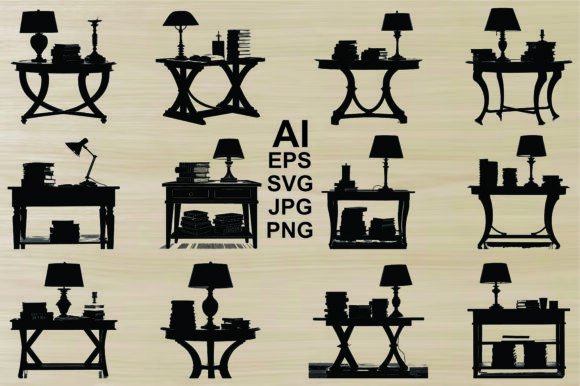
Table Lamp and Books Silhouette
A Quiet Moment, Perfectly Stitched
First glance at Table Lamp and Books Silhouette lands like a soft page turn—calm, intentional, and deeply familiar. It’s not loud or trendy; it’s the kind of illustration that feels like stepping into a sunlit corner of a well-loved library or a quiet study nook. The composition balances negative space with clean, confident outlines: a table anchoring the scene, a lamp casting gentle visual weight, and books stacked with just enough variation to suggest personality—not perfection. As an embroidery designer who’s stitched hundreds of motifs for real clients and small shop products, I immediately saw its potential—and its limits.
Where This Design Truly Shines
I recently tested Table Lamp and Books Silhouette on a natural linen tea towel for a boutique kitchen line. It worked beautifully: the silhouette’s open shapes translated cleanly into satin and fill stitches without overcrowding the fabric. No tiny interior details demanded micro-hooping or thread changes—just steady, readable lines that read clearly at 3.5 inches wide. That same design later became a custom embroidered patch for a local indie bookstore’s staff aprons. Customers noticed it right away—not as decoration, but as *recognition*. “That’s our reading nook,” one said, pointing to the lamp shape. That’s the quiet power of this motif: it evokes feeling, not just form.
It fits naturally in projects where warmth and intention matter more than flash: baby onesies (paired with soft ecru thread on oatmeal cotton), minimalist sweatshirt embroidery for teachers and librarians, pillow covers for nursery or home office decor, and even holiday gift tags printed *and* stitched as layered applique designs. As a digital embroidery file, it holds up across formats—clean vector roots mean crisp scaling for both 2-inch tote bag accents and 5-inch pillow centerpieces.
Real Fabric Realities: Where Caution Fits
This isn’t a design for every surface—or every stitcher’s comfort zone. On thin or stretchy knits (like lightweight t-shirts or baby bodysuits), the outer silhouette lines can blur if stabilizer isn’t layered thoughtfully. I recommend tear-away + light cut-away combo for anything under 200 gsm. And on dark fabrics? Test thread contrast early. A medium-gray fill stitch reads softly on navy—but swap to cream or warm beige, and the whole motif lifts with quiet confidence.
Caps and curved surfaces demand extra attention. The lamp’s curve and book stack’s top edge hold up well *if* you keep the final size between 2.75–3.25 inches and avoid placing it near the bill seam. Tiny corners—like where the lamp base meets the table—can feather or skip on low-tension machines. Always run a test on scrap fabric first, especially if stitching on textured weaves like burlap tea towels or heavyweight canvas totes.
What It Adds to Your Handmade Product
- Visual clarity — Clean lines mean legibility even at modest sizes, helping customers instantly grasp the theme (reading, study, vintage calm).
- Brand consistency — Works seamlessly across product types (patches, apparel, home goods) without needing redesign or color overrides.
- Giftability — Feels personal without being literal. Not “Happy Birthday”—but “I see you, reader, thinker, quiet soul.” That resonates deeply in handmade markets.
- Professional polish — Its balanced proportions and intentional spacing signal thoughtful curation—not clipart repurposed.
Design Notes Every Embroiderer Should Check
Before cutting thread or listing your next Etsy patch set, pause here:
- Run a black-and-white mockup—this design relies on shape, not shading. If it disappears in grayscale, adjust fill density or outline weight.
- Confirm hoop size compatibility. While the motif itself is compact, some versions include optional flourishes (a subtle shelf line, faint shadow beneath the lamp) that may extend beyond a 4×4 hoop.
- Inspect small details at actual stitch-out scale: the gap between books, the lamp’s finial, the table’s leg taper. These define character—and can vanish if digitized too tightly.
- Check licensing terms carefully. As an Illustrations asset marketed for commercial use, verify whether resale of finished embroidered items (e.g., pre-stitched pillow covers) is permitted without additional attribution or fees.
- Compare how it behaves on light vs. dark backgrounds. A design this serene gains strength from contrast—don’t assume white thread will always sing.
Why It Belongs in Your Next Project—Not Just Your Folder
Table Lamp and Books Silhouette doesn’t shout. It settles in. That makes it unusually versatile for craft businesses building long-term appeal—not seasonal spikes. I’ve used it in three distinct contexts this season: a monochrome embroidered cap for a literary podcast merch line, a two-tone applique patch for a teacher appreciation kit, and a delicate running-stitch version on organic cotton baby swaddles. In each case, customers commented on how “thoughtful” and “unforced” it felt—proof that strong design isn’t about complexity, but resonance.
For Etsy sellers and small shop owners, it’s a quiet differentiator. While others chase trending icons, this motif builds trust through familiarity and restraint. It says, “I made this for someone who values stillness, story, and substance.” That’s not just embroidery—it’s storytelling with thread.
Final Thought Before You Stitch
Treat Table Lamp and Books Silhouette like a well-chosen font: understated, reliable, and full of quiet authority. It won’t carry weak branding—but paired with intentional color, fabric, and placement, it elevates everything it touches. Just remember: even the most elegant silhouette needs the right stabilizer, the right tension, and the right pause before pressing “start.” Your finished product—and your customer’s quiet smile—will thank you.